




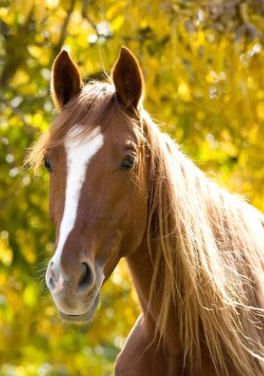


Helps maintain healthy skin function and coat.
Hair, a major reflection of health status
As you probably know, coat (or hair) is the best outward indicator of health. A healthy, well-fed, and well-groomed animal has a smooth, shiny coat. An unhealthy animal will have a dull, brittle coat, will scratch itself, and will develop bald patches (as seen in equine atopic dermatitis).
Several factors can explain dull hair:
- Diet (unbalanced or deficient)
- The presence of external parasites (lice for example) or internal parasites (worms)
- Poor coat care
- A skin disease
- A general health problem
Some diseases prevent the normal regrowth of new hair: these are mainly hormonal imbalances.
Other diseases promote hair loss, for example fungal infections: microscopic fungi that invade the hair bulb and cause hair to fall out.
Hair can also be dull in cases of skin diseases that cause excessive licking or itching. 
Dull fur can also be linked to intestinal parasites that deplete the dog's resources (and lead to vitamin deficiencies).
What to do?
Diet needs to be monitored. Choose foods that are highly digestible and easily absorbed by your pet's body. For example, carbohydrates and starches are not absorbed by the body. Undigested food results in large stools. Easily absorbed food results in small stools.

Another point to watch out for is parasites, both internal and external, keeping in mind that the animal/parasite relationship is a matter of balance. An animal that is unhealthy, weakened, old, or tired is more likely to contract worms or ticks.
Next, you can maintain the skin and coat with specific shampoos. However, be careful, as shampoos can stress animals simply by the sight of the bathroom approaching. The new smell and texture of the skin and coat disorient all animals for whom smell is vital. The chemical agents also destroy the skin's protective barrier, so shampoos should only be used as a last resort. Finally, in the case of a sick animal, a beautiful coat achieved with a shampoo will not cure the illness. It will only provide a temporary mask.
Shampooing is also avoided for self-cleaning breeds such as primitive and Nordic dogs (huskies, malamutes, etc.). Yes, even after a run through the mud.
Our colleague and human from Chispi, whom you've already seen in the HOLIALLER profile, only uses the shower as a weapon of choice when she's rolled in deer droppings or been sprayed by a skunk. She also reminds us that you should NEVER shave a Nordic dog except to clean a wound.
In summary, the condition of the skin and hair reflects the overall condition of the animal.
Healthy skin and a beautiful coat characterize a healthy animal . Dry, flaky, itchy skin accompanied by dull, brittle hair characterizes an animal with poor diet and/or an underlying disease.

HOLICAPIL
Supports the immune defense and expression barriers of hair, skin, and mucous membranes. muzzle, of eyes and ears.
In choosing the ingredients that make up HoliCapil , Martine Jourde, our Chief Homeopath, drawing on her 40 years of experience, took into account several factors such as the synergy between remedies to enhance their effectiveness and an approach to traditional Chinese medicine.
"Our homeopathic solutions can in no way replace veterinary advice."
Ingrédients et excipients
Arsenicum iodatum, Bovista, Calendula, Candida albicans, Croton tiglium, Condurango, Dolichos pruriens, Dulcamara, Fagopyrum, Graphites, Juglans regia, Kali arsenicosum, Kali iodatum, Nitric acidum, Penicillinum, Petroleum, Staphylococ., Thuja occidentalis, Viola tricolor, Vaccinotoxinum . ..........Excipients: water and alcohol.
Précautions
Keep out of reach of children. Place the products in the shade, away from electrical outlets and heat sources. There is no need to refrigerate the product.
Contraindications
You can use homeopathic products at the same time as medications, there are no contraindications.
Essential oils
If you use essential oils, you should give the homeopathic product first and wait at least a few hours before applying the essential oils.
Mode d'emploi
Shake the bottle by tapping it in the palm of your hand before each use to energize the product.
How to give the drops?
To administer the drops, position yourself behind the animal and with one hand, hold the head firmly and with the With the other hand, put the dropper in the corner of the mouth, pinch the pipette and add the number of drops needed.
- For kittens and puppies, give a maximum of 2 to 3 drops.
- Adult cats and dogs, approximately 8 drops
-
Larger dogs, 50 kg and more: 10 to 12 drops.
- Horses: 10 ml
Easy to administer
It is best to put the drops directly in the mouth but you can also put a few drops on your food or even put a squirt in your drinking water. Do not put 2 different products in drinking water.
If you have to give 2 different products, wait at least 5 minutes between each dose.
The more intense the symptoms, the more the frequency should be increased. Reduce the intake depending on the improvement in the condition. NEVER GIVE THE PRODUCTS LONG TERM, UNLESS OTHERWISE ADVISED BY THE HOMEOPATHIST.
As each animal is different, we offer a personalized service. It is therefore best to contact us to find out how to proceed.